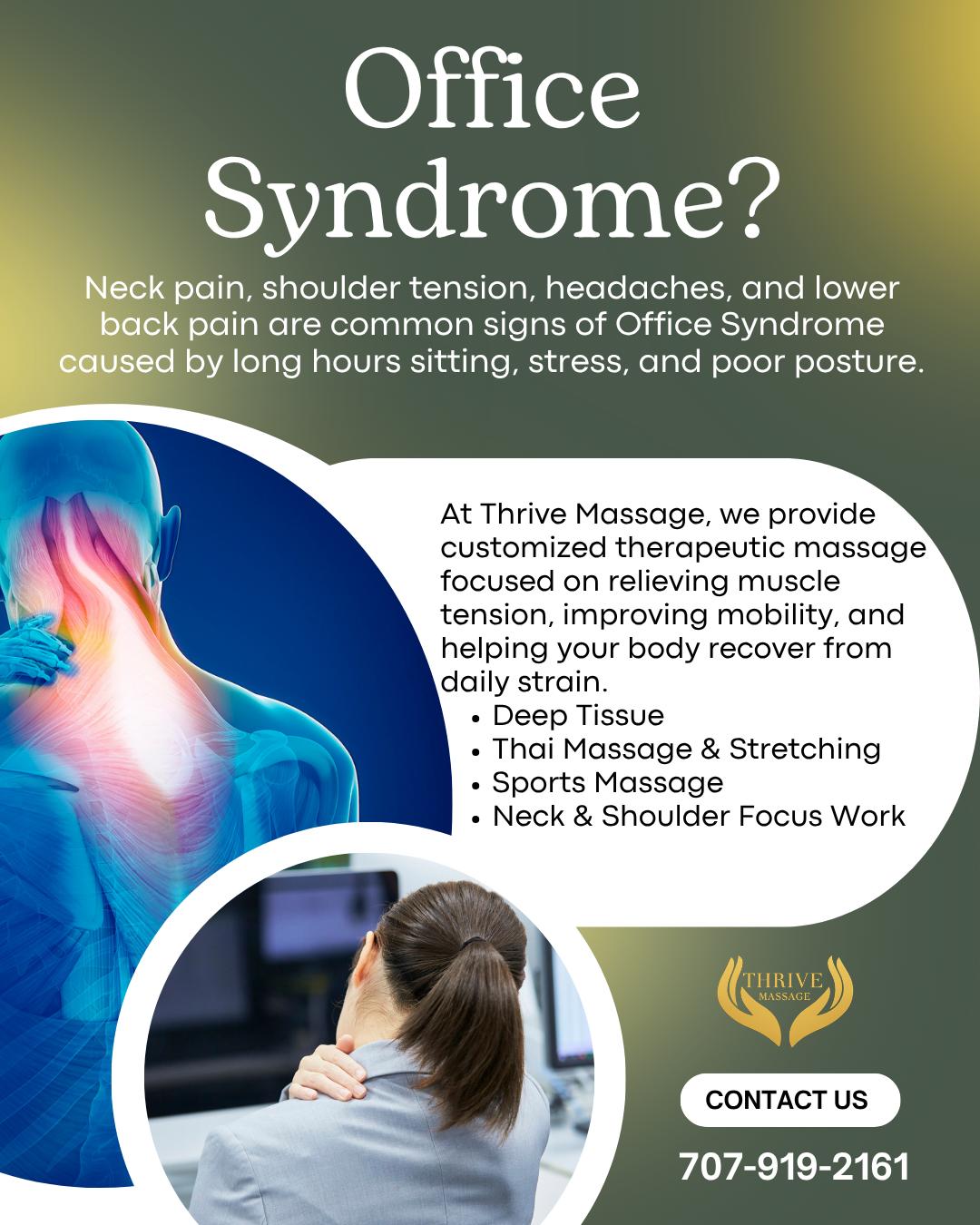
Office Syndrome: Why Your Desk Job May Be Causing Neck, Shoulder & Back Pain
Do you feel tightness in your shoulders, stiffness in your neck, headaches, or lower back pain after a long day at work?
You are not alone.
Many people who work at a desk or spend hours on computers develop what is commonly called “Office Syndrome” — a combination of muscle tension, poor posture, stress, and repetitive strain caused by everyday work habits.
At Thrive Massage, we regularly help clients experiencing pain and tension related to office work, long sitting hours, and stress.
Common Symptoms of Office Syndrome
Office Syndrome can affect the body in many ways, including:
- Neck stiffness
- Shoulder tension
- Upper back tightness
- Lower back pain
- Headaches
- Wrist and arm discomfort
- Hip tightness
- Poor posture
- Fatigue and stress
Over time, these symptoms can begin affecting sleep, energy levels, productivity, and overall quality of life.
What Causes Office Syndrome?
Modern work habits place a lot of strain on the body. Common causes include:
- Sitting for long periods
- Looking down at screens
- Poor workstation ergonomics
- Lack of stretching and movement
- Stress and muscle tension
- Repetitive motions from typing or mouse use
Even small posture imbalances repeated daily can create chronic tension patterns throughout the body.
How Therapeutic Massage Can Help
Massage therapy can help reduce muscle tension, improve circulation, and release tight areas caused by repetitive office work.
At Thrive Massage, we customize each session based on your problem areas and tension patterns. Techniques may include:
- Deep Tissue Massage
- Trigger Point Therapy
- Thai Stretching
- Sports Massage Techniques
- Neck & Shoulder Focus Work
Benefits may include:
- Reduced pain and stiffness
- Improved posture awareness
- Better mobility and flexibility
- Reduced stress
- Fewer tension headaches
- Improved relaxation and sleep
Small Changes That Can Make a Big Difference
In addition to regular massage, these habits may help reduce office-related pain:
- Stretch throughout the day
- Adjust your desk and monitor height
- Take short walking breaks
- Stay hydrated
- Practice better posture
- Avoid staying in one position too long
Your body was not designed to sit still all day.
Start Taking Care of Your Body
Pain and tension should not become your “normal.”
Whether you work at a desk, drive long hours, or spend your day on computers, therapeutic massage may help your body recover and feel more balanced again.
📍 Thrive Massage – Rohnert Park
📞 707-919-2161
Relief for pain, stress, and tension starts here.